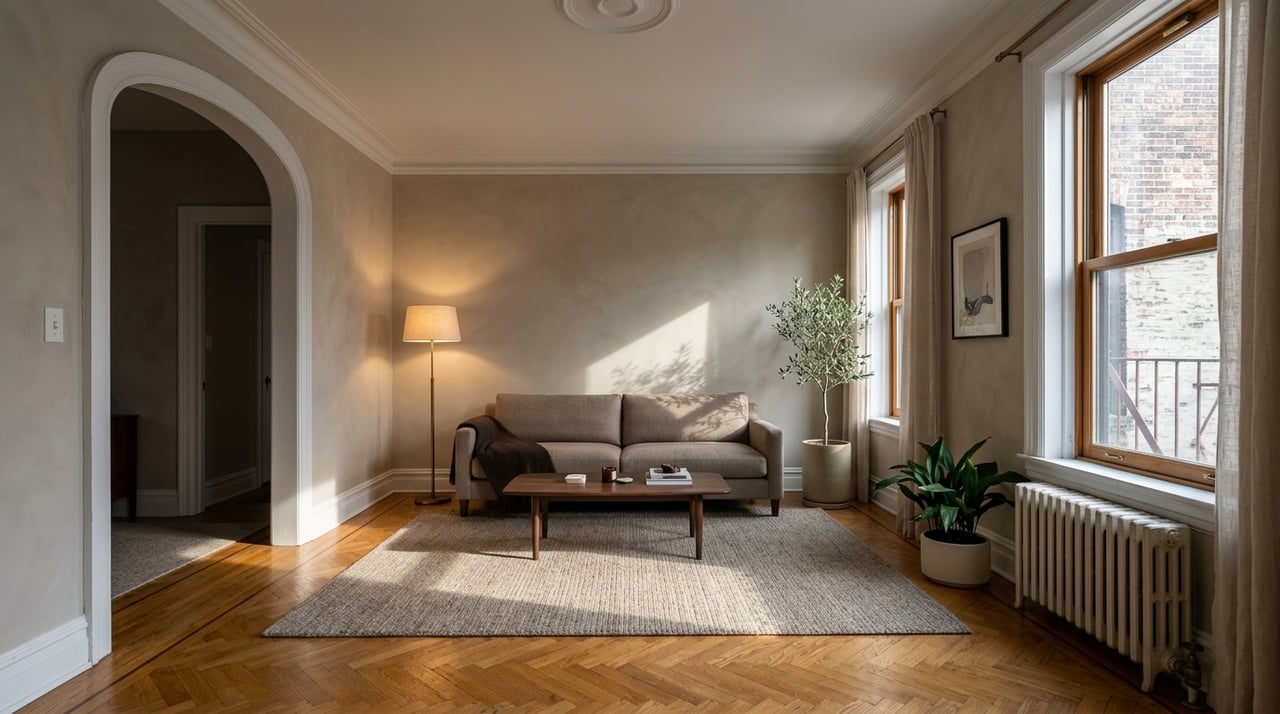
Wondering why so many Manhattan buyers and renters stay loyal to prewar apartments, even with sleek new towers across the city? The answer usually comes down to something you can feel the moment you walk in: scale, character, and a sense that each room has a purpose. If you are weighing whether prewar living fits your lifestyle, this guide will help you understand what these homes are, how they function day to day, and what to watch for before you commit. Let’s dive in.
What “prewar” means in Manhattan
In Manhattan, “prewar” usually refers to apartment buildings built before World War II. It is a design and era label, not a legal category. That matters because a prewar apartment can be a co-op, a condo, a rental, rent-regulated, or none of the above.
New York City uses different legal cutoffs for housing rules. For example, rent-stabilized apartments are most often in buildings with six or more units built before 1974, while rent control applies to a much smaller group of older apartments tied to long-term occupancy. In other words, a building’s age may offer clues, but it does not tell you the full legal story.
Prewar buildings are a major part of Manhattan’s residential identity. Preservation materials from the city show that large apartment houses spread across areas like the Upper East Side and Morningside Heights in the early 20th century, helping define apartment living as a core New York housing type.
Why prewar apartments feel different
The appeal of a classic Manhattan prewar apartment often starts with proportion. These homes commonly feature high ceilings, hardwood floors, thick or plaster walls, detailed woodwork, crown moldings, ornate plaster details, big windows, and solid wood doors. The result is a home that feels substantial and layered rather than lightweight or purely functional.
Prewar layouts also tend to separate rooms more clearly than newer apartments. Instead of one large open living area, you often get an entry sequence, a dedicated living room, distinct sleeping areas, and a kitchen that is less visually central. For many people, that structure feels closer to house-style living within an apartment building.
A well-known example is the classic six. This traditional layout usually includes a living room, formal dining room, kitchen, two bedrooms, and a maid’s room. Many classic sixes also have ceilings of at least 9.5 feet, along with a clear division between public, private, and service spaces.
What daily life feels like
Daily life in a prewar apartment can feel quieter and more buffered than in some newer buildings. Thick masonry, plaster walls, and poured concrete floors often reduce sound transmission. That can make a meaningful difference if you value a calmer interior experience in a dense city.
Older construction also affects temperature and airflow. Because many prewar buildings were designed before central air became standard, features like window placement, cross-breezes, courts, and building orientation often play a bigger role in summer comfort. In winter, the experience is shaped by city heat-season rules and the building’s older systems.
New York City’s heat season runs from October 1 through May 31. During that period, building owners must keep apartments at least 68°F during the day when the outdoor temperature falls below 55°F, and at least 62°F overnight, while also providing 120°F hot water year-round. In practical terms, that means winter heat is usually dependable, though some prewar apartments can feel quite warm or dry during colder months.
Common building features to expect
Many prewar buildings were designed with shared spaces and durable materials in mind. You may find large, decorative lobbies, basement storage, central laundry, and internal courts that help bring light and ventilation into rooms. These details often add to the sense of permanence and architectural identity that buyers and renters are seeking.
At the same time, prewar buildings are less likely to offer the amenity package common in newer condos. Resident lounges, fitness centers, and rooftop spaces are not as typical, though some buildings have added them over time. The tradeoff is often simple: more character and better room proportions, but fewer modern extras.
Where prewar living stands out in Manhattan
Prewar living is closely tied to some of Manhattan’s most established residential areas. Classic six apartments are especially associated with the Upper East Side and Upper West Side, where many early 20th-century apartment houses still define entire blocks.
Morningside Heights is another strong example. According to the Landmarks Preservation Commission, the arrival of the IRT subway in 1904 helped drive apartment-house development there, and 64% of the district’s buildings were built between 1900 and 1910. That history helps explain why the area feels so architecturally cohesive today.
Other neighborhoods, including Yorkville and the West Village, also reflect the role prewar buildings play in shaping Manhattan’s streetscape. In many of these areas, the older building stock contributes to a more layered, residential feel that appeals to buyers and renters who value texture, history, and consistency in the built environment.
Buying a prewar apartment
If you are buying a prewar apartment in Manhattan, one of the first questions is often whether the property is a co-op or a condo. Most prewar buildings are co-ops, while prewar condos are relatively rare. That distinction matters because ownership structure affects everything from board review to renovation rules and long-term flexibility.
The New York State Attorney General notes that co-op and condo sales are governed by offering plans. For existing buildings, the sponsor must disclose visible defects to the engineer, and buyers are advised to review board minutes, financials, and local building records carefully.
That review matters because major building components can be expensive to repair. Items such as facades, roofs, elevators, plumbing, electrical systems, and boilers may involve significant costs. In a prewar building, due diligence is not just paperwork. It is one of the clearest ways to understand the building’s condition and future obligations.
Renting a prewar apartment
If you are renting, do not assume a prewar apartment is automatically rent-stabilized or rent-controlled. Age alone is not enough to confirm legal status. New York City states that rent-stabilized apartments are most often in buildings with six or more units built before 1974, while rent control applies to a much smaller legacy group.
The practical takeaway is simple. If legal status matters to your search, it needs to be verified directly rather than guessed from the building’s architecture or construction date. A beautiful prewar facade may tell you a lot about style, but not enough about the lease structure.
Renovation and safety considerations
Older buildings often come with older systems, and that makes compliance and renovation planning especially important. If you are buying with future updates in mind, it is wise to understand the building’s rules and the condition of legacy infrastructure before you start imagining finishes and floor plans.
Lead paint is one issue that deserves close attention in older housing stock. New York City’s Department of Housing Preservation and Development says buildings built before 1960 are subject to lead-paint rules. As of August 9, 2025, owners must use EPA-certified inspectors and XRF testing for units and common areas in pre-1960 rental buildings.
For buyers with children, this is a meaningful due-diligence item. More broadly, it is a reminder that prewar charm and older-building responsibility often come together.
The tradeoff that defines prewar living
Living in a classic Manhattan prewar apartment is usually a choice in favor of character, proportion, and a more defined sense of home. You may gain high ceilings, better room separation, quieter interiors, and architectural details that are difficult to replicate in new construction.
You may also give up some convenience. Open-plan layouts, central air, and extensive amenities are less common, and older systems can require more patience and more careful review. For many Manhattan buyers and renters, though, that tradeoff feels well worth it.
If you are drawn to homes with architectural integrity and long-term appeal, a prewar apartment can be one of the city’s most rewarding ways to live. If you want thoughtful guidance on evaluating a classic Manhattan apartment, reach out to Chase Landow for a tailored conversation.
FAQs
What is a prewar apartment in Manhattan?
- A prewar apartment in Manhattan generally means an apartment in a building constructed before World War II, and the term refers to the building’s era and style rather than its rent-regulation status.
Are Manhattan prewar apartments always rent-stabilized?
- No. New York City says rent-stabilized apartments are most often in buildings with six or more units built before 1974, so a prewar building may be rent-stabilized, market-rate, owner-occupied, or something else.
What is a classic six apartment in Manhattan?
- A classic six is a traditional six-room prewar layout that usually includes a living room, formal dining room, kitchen, two bedrooms, and a maid’s room.
Where are prewar apartments most common in Manhattan?
- Prewar apartments are especially associated with the Upper East Side, Upper West Side, Morningside Heights, Yorkville, and parts of the West Village.
What should you check before buying a Manhattan prewar apartment?
- You should review the offering plan, board minutes, financials, and local building records, while paying close attention to the condition of major systems like the facade, roof, elevator, plumbing, electrical, and boiler.
Do Manhattan prewar apartments usually have modern amenities?
- Not usually. Many prewar buildings offer character-rich common spaces and practical features like storage or laundry, but fitness centers, lounges, and rooftops are less common than in newer developments.